Blender-Native Pipeline: 3D Automotive and Visualizer Work

Updated: Aug 25
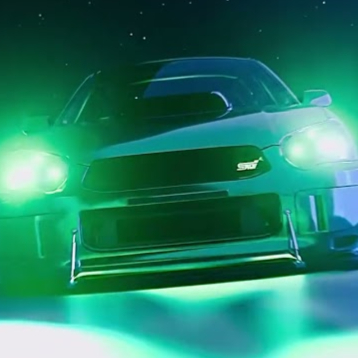
Most pipelines for 3D animation and CGI are fragmented. Modeling in one tool, rendering in another, compositing in a third. My approach is the opposite: everything lives inside Blender. From the first vehicle model to the final color grade, the entire production stays in one environment. That's a design decision that keeps the visual language consistent and the pipeline fast.
Automotive 3D: car culture as cinematic subject
The automotive 3D work is driven by a genuine obsession with car culture. These are personal films that treat vehicles as cinematic subjects the same way a music video treats a performance. Stylized lighting, dynamic camera work, and sound-reactive pacing shape each piece to feel closer to a music video or short film than a product demo.
Every asset is built in-house. Vehicle modeling and shading, environment design, worldbuilding, and all final compositing happen inside Blender. The result is a seamless, fully 3D-native pipeline where every element is purpose-built for that specific piece rather than pulled from a stock library.
Visualizers: experimental 3D synced to music
The visualizer work takes a different direction. Short-form 3D pieces synced to music, exploring concepts that don't fit cleanly into narrative formats: inflation metaphors, space themes, alien narratives, Gaussian splatting experiments, and abstract motion design. Each visualizer is built as a standalone visual experiment.
Gaussian splatting in particular has been a focus recently, using point cloud representations of real environments to create something that sits between photography and 3D in an uncanny, textured way. The output feels neither fully digital nor fully real, which is exactly what makes it interesting.
CG integration: hybrid live-action and 3D
Hashbass x Warren Mendonsa - Infinite Worlds brought the 3D work into a live-action context. I built a full 3D environment for CG inserts integrated into the music video, designed as a hybrid visualizer blending live footage with stylized CG moments. Getting the invisible seam right between 3D and camera footage is the most technically demanding part of this kind of hybrid production.
Why Blender-native works for solo production
Keeping everything inside Blender means the render can be adjusted all the way through color grading without re-importing assets. Changes to lighting affect the render pass, which affects the composite, which feeds directly into the color grade. No file conversion, no roundtrip, no version mismatch. For solo production, that's the difference between a project that ships in a week and one that drags for a month.


Comments